
October 12th, 2023
As I sit here in my small room in Vilnius, far from the old apartment in Kaunas, I find myself writing down the chain of events that turned our family upside down and forced me and my twin sister Aistė to carve out our own path. It feels like a lifetime ago, yet the memories sting as if they happened yesterday. Back then, we were just thirteen, living in a building where voices carried easily through the stairwells.
One evening, Aistė and I were heading up the steps when we caught the familiar sounds of our parents, Vytautas and Daiva, clashing again behind their door. Her voice cut through the air: What is wrong with you this time? How long must this go on? I am exhausted with all of it! We stopped dead in our tracks, our eyes locking in that instant understanding we had developed over months of such scenes. No explanation was necessary. We both knew the only sensible move was to retreat. Letting out a shared breath, we turned and made our way quietly toward our grandmother Onas place in the next entrance. Her flat had slowly become our shelter. What used to be occasional weekend stays had shifted into almost every night finding refuge there.
The mood in our own home had long since grown poisonous. Vytautas and Daiva seemed to forget the world existed, shouting without pause. The worst part was how they pulled us into the middle of it. Our mother would spin toward us and demand, Say it, am I not correct? You stand with me, yes? Our father would jump in before any reply, No, I hold the truth here! Confirm it for me! Aistė and I kept our silence. Neither of us wished to choose a side or become entangled in their endless cycle. We simply craved quiet, steadiness, and comfortthe very things waiting at Onas.
These outbursts happened day after day, repeating like a scratched record nobody dared to lift the needle on. We grew skilled at reading the early warnings: a sharp edge in a voice, sudden stiff gestures, the way they glanced at one another. All of it signaled it was time to slip away. No child wants to exist in constant strain where the smallest exchange risks exploding into chaos.
We struggled to grasp what had sparked this collapse. Our family had never matched the picture-perfect versions shown in advertisements, yet Vytautas and Daiva once knew how to reach agreements. Disagreements arose, as they do everywhere, but they usually ended with measured talks. Daiva might frown, Vytautas might raise his voice a notch, yet within half an hour matters settled. Everyone would gather around the table again for tea and plans for the weekend.
Roughly two years earlier, a shift occurred without warning. It was as though our parents had been quietly replaced by versions who discovered reasons to clash in the most ordinary details. A cup left dirty on the table? A drawn-out speech about carelessness and disrespect. A shirt hung on the wrong hook? Cutting remarks about household order. A spoon forgotten in the sink? Treated almost like a serious offense deserving lengthy interrogation.
One night at Onas, I sat at the kitchen table stirring my tea without much thought, watching the amber patterns swirl in the cup. After a long stretch of quiet, I asked with a heavy heart, How can things be this way, grandma? Everything turned after their shared trip. What exactly happened there?
Ona paused with her own cup halfway to her lips, set it on the saucer, and traced a gentle hand over mine. She had her own suspicions about the rift, yet they brought her no joy.
Grown-ups will sort their own affairs, she answered softly, keeping her tone steady. At times people require space to decide the right step forward.
I nodded, though my expression betrayed lingering doubt. I sensed she held something back, but pressing further felt pointless. As long as we were viewed as children, serious matters would stay closed off.
We cannot endure the shouting any longer! I burst out with frustration. Neither of us can finish lessons properly or even read a page in peace! I cannot recall the last time the four of us sat down together for a meal. If being together causes them such pain, they should separateeveryone would breathe easier!
The words escaped before I could soften them, yet they captured the reality of recent months. I spoke not only for myself but for Aistė as well; she carried the same weight. Silence had vanished from our home long ago: Daiva would snap something abrupt, Vytautas would answer with irritation, and the back-and-forth would begin, leaving nowhere to hide.
Mantas Ona faltered. She set aside her knitting, studied my face, and slowly shook her head. Have you considered what follows if they part ways? The two of you would be divided. Are you prepared to live apart from Aistė?
We will stay with you! Aistė declared right away, fixing Ona with pleading eyes. We are already here most of the time anyway! You would not object, would you?
Ona remained still. She grasped our distress and the exhaustion etched on our faces. On one side, we would indeed be secure under her roofin a peaceful setting where lessons could be done without raised voices and books read without interruption, where we could feel shielded. She cared for us deeply and stood ready to wrap us in attention.
On the other side stood the question of our parents. How to explain that we no longer wished to remain at home? Would they accept such an arrangement? If they did, how might it reshape their bond with us? Could the outcome be a total break in relations?
Let us avoid haste, she said after a deep breath. You know I welcome you here always. Yet first we should speak with your mother and father. Perhaps together we can locate a way to mend matters.
Do not worry, we will handle the conversation ourselves, Aistė stated with assurance, her face brightening. Just do not turn us away, please! We truly cannot remain there! Separate lives would suit them betterotherwise they risk actually harming one another someday! I watched father raise his hand toward mother yesterday He stopped short, truly! But he stood right on the edge.
Aistė fell quiet, revisiting that frightening instant. She had entered the kitchen for a glass of water and halted in the doorway: Vytautas half-turned toward Daiva, his arm suddenly lifting, Daiva instinctively shrinking back. Within seconds he lowered it, yet that brief span stretched into an eternity for her.
Grandma, please agree! I urged, stepping closer and taking her hand as if to anchor her decision. We will assist with every household task. Only do not send us back there. They pay us no mind whatsoever! Yesterday I mentioned a parent-teacher meeting to father. Do you know his reply? Ask your mother! So I did. Can you guess her answer?
Go to father? Ona inquired quietly, already aware.
Precisely! I replied with a bitter half-smile. Afterward they argued for two full hours over which of them would attend. They remained in separate rooms, yelling down the corridor. I simply stood and listened.
I requested signatures for a museum excursion permission slip, Aistė added, dropping her gaze while her fingers twisted the edge of her sleeve. Now I am the sole pupil in class who will miss the trip. Neither signed the form. Instead they launched into another quarrelmother insisted it was fathers responsibility, father claimed mother should manage school affairs.
Ona regarded us and recognized the depth of our fatigue. What showed in our eyes was no ordinary childhood weariness but something built over many months of arguments replacing family closeness and indifference replacing support.
It unfolds this way constantly, I said, letting my shoulders drop. My voice carried the tiredness of repetition. Every approach we make becomes fuel for fresh conflict. We do not even want to return home anymore. A couple of evenings back we arrived near elevenand did they scold us? Not at all! They simply directed us to bed without inquiring where we had been. Later they spent a long while accusing each other of poor upbringing.
We exhaled in unison once more. During those recent months we had weighed the possibility that divorce offered the sole escape. Yet the thought of being torn from one another terrified us. One of us would remain with Daiva, the other with Vytautas, turning our constant companionship into occasional weekend encounters.
We weighed options in hushed tones during evenings alone in our room. Once I suggested in jest that we simply pack rucksacks and depart without destination. I offered it with a grin to ease the tension, yet Aistė received the notion earnestly. Her eyes flared briefly before she murmured, What if we truly left? Even for a few days At that moment we both understood the household strain had grown so severe that flight no longer seemed entirely reckless.
Then the notion struck us: Ona! Why not relocate to her home? The idea surfaced for both of us simultaneously. Aistė expressed it first: What if we ask grandma to let us live here? She will never raise her voice or shout. And we will avoid listening to these unending disputes I followed at once: Yes! She is kind and always backs us. Her flat is spacious enough for us as well.
We began picturing the new routine: unhurried breakfasts, quiet time for schoolwork, evenings spent at board games with Ona. No shouting, no blame, no need to retreat to our room to dodge the next outburst. After a prolonged stretch, hope flickered again in our chests. Let our parents manage their own affairs; we would at last gain tranquilitythat was the vision Aistė and I held while imagining life under Onas roof.
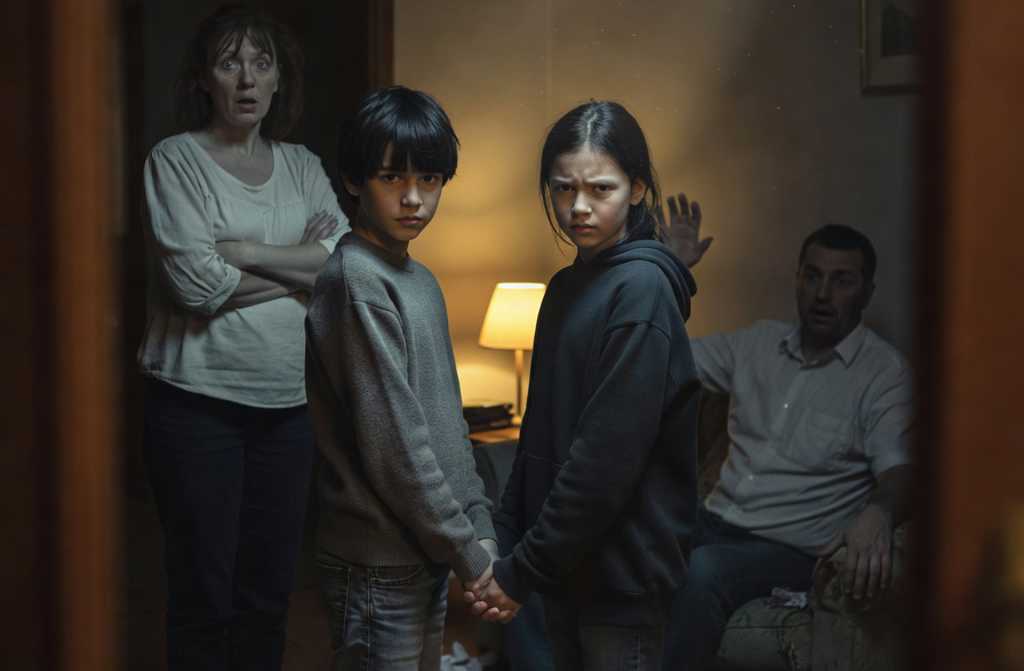
The decisive evening arrived. Mother, father, we must speak with you seriously, we declared together, standing in the living room. We had waited until both were present and entered with resolve. Aistė gripped my hand firmly to steady herself. First, though, promise to hear us through before offering any views.
Vytautas set his phone aside and raised his eyebrows in surprise. Daiva, busy sorting items on the couch, straightened sharply. Their faces registered that we had uttered something beyond belief.
This stems from your parenting! she huffed, folding her arms. The children now dictate terms! As though we must account to them!
Who are you to speak! Vytautas shot back, discarding the phone. I am constantly at work, striving to support us all. You remained with them constantly! And what lessons did you impart? Why do they now issue orders?
We glanced at one another. This reaction matched our expectationsthe talk sliding straight into familiar accusations. Yet retreat was impossible.
Stop! Aistė cried, her voice near breaking. She advanced a step, striving for clarity and calm even as her insides trembled. Mantas and I have considered this and concluded you must divorce.
Silence claimed the room at once. Daiva stood with her mouth parted, while Vytautas rose slowly from the couch.
What news this is! mothers tone turned menacing. Aistė, you remain far too young to instruct adults on living! And what else have you decided? Perhaps you will also split the flat for us?
If you refuse to divorce, we will contact the child protection services, I said, tightening my hold on Aistės hand to draw resolve. Though my voice stayed steady, I harbored private uncertainty about the weight of the words. Then, father, your position could be at risk. Your firm frowns upon scandals, correct? You yourself noted that reputation matters above all.
And you, mother, Aistė continued, meeting Daivas gaze directly, neighbors will cease respecting you. They will stop speaking with you entirely! Everyone already knows how you two shout, and we can supply further specifics!
They are threatening us! Just look at them! Daiva finally managed, shifting her stare between us. These are our own children! How dare you treat us this way?
We are not issuing threats, I replied quietly yet steadily. We merely wish you to grasp that this manner of living is impossible. We are worn out! Worn from the shouting, from your failure to hear us, from ordinary requests becoming battles.
You will divorce and separate, while we will reside with grandma, we stated together as though rehearsed beforehand. It will prove better for all: calm for us, freedom from constant clashes for you. We refuse to remain caught between you like targets in crossfire.
Our parents stood motionless. For the first time in ages they lacked an immediate reply. In past discussions they would launch into arguments, cut each other off, assign blameyet now both appeared struck dumb.
Their thirteen-year-old children acted in ways entirely unforeseen! Aistė and I stood united, hands clasped, regarding them with firmness free of our usual hesitation. We addressed grave subjects that the adults themselves had avoided confronting.
Vytautas and Daiva had privately mulled divorce on multiple occasions. What always halted them was the identical concern: with whom would the children remain? Dividing twins appeared unthinkablewe shared an extraordinary closeness, performed every activity jointly, leaned on one another. Our parents could not envision separating us, compelling us into distinct households and limiting contact to weekends alone.
The possibility of Onas home had never crossed their minds earlier. Somehow the idea had not surfacedperhaps because each remained too consumed by personal grievances and mutual grievances. Yet upon hearing our suggestion, they could not help wondering whether this might represent a solution. Ona adored us, possessed ample space, and always welcomed our presence Perhaps this would address at least a portion of the difficulties?
I will telephone mother, Vytautas said at last through clenched teeth. His words emerged thickly, as though forced. Should she consent
He never completed the sentence. Daiva cut in abruptly, her voice carrying a weariness that startled even herself:
Then we can finally cease tormenting one another. Make the call. I will rejoice at no longer seeing your face daily.
Her statement lingered. She had not intended such bluntness, yet years of stored hurts and letdowns propelled the words outward.
And how I will rejoice in turn! Vytautas answered, masking pain behind sarcasm.
No malice colored his deliveryonly a bitter twist at the shape their shared existence had taken. He withdrew his phone and dialed his mothers number with deliberate slowness. During the ringing, both avoided each others gaze. They could not yet foresee the conversations outcome, but sensed a threshold might already have been crossed.
That day our family reached a pivotal choice. It commenced with an extended discussion between Vytautas and Ona. She listened without interruption, posing occasional questions for clarity.
Once Vytautas had recounted everything, a stretch of quiet followed. Ona exhaled fully and spoke:
If both of you recognize this serves the children best, then I consent. They will remain protected here; I will see to their needs.
By evening the spouses convened in the kitchenfor the first time in an extended period without raised voices or recriminations. They faced one another and reviewed particulars. Bit by bit they converged on a single conclusion: divorce represented the sole sensible exit. We would relocate to Onas, with our parents sending monthly funds for our upkeep.
Neither intended to abandon us. Both pledged visits on weekends, yet on alternating days to limit their own interactions.
I will arrive Saturday mornings to take them out, and you on Sundays, Vytautas said wearily, earning a confirming nod. This arrangement simplifies matters. Above all, the children must not feel discarded.
Their priority lay in reducing contact to prevent fresh disputes. They committed to avoiding discussion of one another around us, refraining from drawing us into allegiances, and settling disagreements outside our hearing.
We remain their parents, Vytautas observed. And we must continue acting as such, even if we cease being spouses.
Time later confirmed the choice worked well. We could finally unwind and resume ordinary teenage rhythms. Aistė enrolled in an art circleshe had long wished to join but lacked the focus amid ongoing worries. I took up basketball and gained teammates there. We resumed shared activities: city walks, cinema visits, school talks conducted without dread of an impending outburst.
Academic steadiness returned as well. A tranquil space for study now existed, free from distracting arguments. Assignments were completed without anxiety, and grades improved promptly. Teachers remarked on the difference: You two have grown so focusedcontinue in this manner!
Life gradually settled into a fresh patternnot flawless, yet steady and foreseeable. We stopped retreating to our room, stopped startling at loud tones, stopped fretting over each action. We simply existedas adolescents should when fortunate enough to locate stability amid hardship.
Five years onward, the Kazlauskas household moved at a measured, tranquil pace. Aistė and I had adjusted fully to the new rhythm: classes, clubs, time with friends, and comforting evenings beside Ona. Our parents continued arriving on separate dayseach bringing gifts and focus, yet absent prior complaints. Across that span they had mastered restrained, courteous exchanges without earlier flashes of temper.
The initial direct meeting between the former spouses took place at our graduation evening. The school hosted a formal gathering, and both attended. They began cautiously, occupying opposite sections of the hall, yet the distance gradually lessened.
During the dances, Vytautas approached Daiva unexpectedly:
Shall we dance? Recall old times.
She delayed briefly before nodding.
Afterward they remained in the schoolyard for hours, observing graduates celebrating near the fountain. Talk arose naturallyfirst concerning us, then the past.
They conversed extensively that night, revisiting joyful periods of their marriage and conducting themselves with dignity. They focused not on past hurts but on the positive elements that once united them. Watching from a distance, we felt relief. Still, it pained us to witness two dearest individuals treating each other nearly as adversaries.
Then, without warning, matters shifted. The following day Vytautas and Daiva summoned us to a café. Over tea they exchanged glances, clasped hands, and Vytautas declared with a broad smile:
Children, your mother and I have reflected and chosen to wed once more. These years have shown us our feelings persist! We continue to love one another and desire to restore our family.
His tone carried joy, as though sharing lifes greatest tidings. Daiva radiated anticipation of delight.
We met each others eyesour expressions clouded immediately. Aistės gaze held disbelief; I tightened my fists beneath the table. The same errors repeated! What occupied our parents thoughts? Could they truly share space without renewed clashes?
You cannot be serious? Aistė managed.
Completely, Vytautas replied with certainty. We have each evolved. Learned mutual listening. We wish to offer our family another opportunity.
We stayed quiet. Conflicting emotions churned within: part of us hoped our parents had genuinely transformed, while another feared renewed suffering.
Yet we offered no persuasion against it. We provided no commentary on the announcement, which deeply disappointed them. Daiva regarded us with confusion:
Are you not pleased? We assumed you would celebrate with us.
We merely exchanged looks and lifted our shoulders. What reply could we offer? Do not proceed! Do not damage your lives! Words lodged in our throats. We avoided appearing indifferent, yet feigning satisfaction proved impossible.
Conversation faltered through the remainder of the meeting. Our parents attempted to outline plans; we responded with polite nods, though our minds wandered. En route home Aistė murmured to me:
I hope they understand their actions.
I responded only with a sigh.
So we are heading to the capital? Aistė opened her laptop to examine university sites. Away from this chaos. I can already foresee how this spectacle concludes!
Certainly we are, I answered with resolve, an adult weariness evident in my tone. I passed a hand over my hair as if shedding the weight of recent months. They may manage peacefully for a month, perhaps two at most. Then the pattern restarts: shouts, slamming doors, accusations I refuse to serve as captive to their bond any longer. I will not spend each morning guessing their mood or which of us faces the next wave of grievances.
I rose and paced, absently gathering scattered books. One thought circled: why do adults, meant to model wisdom and steadiness, act like erratic youths? Why, instead of resolving issues, do they tread the identical errors repeatedly?
We must depart, I repeated, pausing at the window. Outside, twilight descended slowly, bathing Kaunas in gentle orange hues. I gazed outward, attempting to discern my future there. Far enough that their conflicts cannot reach us. Let them handle their own matters. We are no longer their counselors, their go-betweens, their shields. We possess our own existence, our own aspirations, and I will not permit another cycle of parental turmoil to dismantle them.
When do we submit applications? Aistė inquired evenly.
Tomorrow, I stated without wavering. To eliminate any chance of reversal.
She nodded silently, eyes fixed on the screen. Pages from Vilnius university sites scrolled byshe had spent a week reviewing programs, dormitory conditions, and post-graduation job prospects. Lists in her notebook expanded: advantages and drawbacks of each choice, required papers, deadlines, admissions contacts.
The priority is studying undisturbed, free from their disputes, she observed quietly, concluding her reflections. It is fortunate we will be distant.
Precisely, I concurred, settling beside her. I leaned in to study the lines. When they resume determining fault, we will remain unaware. Let them telephone, vent, attempt to summon us for a family meetingwe no longer participate. Their wish to grant the relationship another chanceI gave a wry smileis theirs alone, not ours.
Daiva and Vytautas proceeded with the second ceremony. This time they deliberately skipped elaborate festivities: extra costs held no appeal, nor did drawing notice, and truthfully they sensed no need for grandeur. They confined themselves to a simple registry office rite and a meal with the closest circleOna, a handful of friends, and us.
Photographs from the day captured genuine happiness. They smiled, held hands, exchanged tender looks. Intertwined fingers, soft expressions, and light contacts filled the frames. Past grievances appeared erased; the separation years seemed beneficial; they seemed certain of their desires, with only brightness ahead. Viewing the images, we could not help wondering: might this occasion truly differ?
Yet regrettably, it did not. Initial weeks after the ceremony passed with unexpected calm: the spouses aimed for greater attentiveness, voiced thanks more readily, and overlooked minor faults. Gradually, however, familiar patterns resurfaced. Within a month, raised voices returned to their flat. Early exchanges involved restrained barbsquiet yet pointed: You neglected to clear after yourself again? Why omit warning of your delay? You might have assisted, given you were home.
Open disputes soon followed. Clashes arose from trivialities: damp towels left in the bathroom, forgotten bread purchases, excessive television volume. Language grew harsher, tones louder, intervals between arguments briefer.
After two months, as I had foreseen, tension peaked. One evening a disagreement over grocery shopping escalated into a tempest. Vytautas, losing control, hurled a cup against the wallit shattered loudly, fragments scattering across the floor. Daiva, equally enraged, seized a plate and dashed it down. The crash of breaking crockery reverberated throughout.
Following such episodes, our parents routinely attempted contact. Conversations invariably opened alike: one would dial while still breathless from the quarrel and unload accumulated resentments.
Can you fathom what he uttered today? Daiva wept when Aistė answered. He makes no effort to comprehend me!
Son, you must grasp my positionshe lacks all self-control, Vytautas told me with agitation. I endeavor, I truly do, yet she appears to seek provocation!
Aistė and I had mastered gentle yet unyielding interruption of these outpourings. We no longer engaged in extended debates or attempts to assign right and wrong. Our replies stayed brief and resolute.
Mother, I am in lecture now; I will return the call later, Aistė said calmly, checking the timetwenty minutes remained before class, yet she had no wish to absorb another tirade.
Father, urgent tasks await; we can address this during the weekend, I responded without lifting my gaze from the screen. I understood that permitting a parent to unload would extend the exchange by an hour, followed by further calming efforts.
Later and weekend consistently deferred. We supplied reasonsstudies, side work, friend gatheringsand calls from our parents grew infrequent. No guilt accompanied this choice: we simply safeguarded our nerves and hours, recognizing our inability to alter dynamics between them.
Our own lives had indeed taken shapefull, purposeful, removed from parental storms. Each day now comprised our personal concerns, pursuits, and intentions rather than anticipation of another clash beyond the wall.
Aistė devoted herself to psychology studies. She enjoyed unraveling the workings of the human mind, the reasons behind actions, and methods to aid those in distress. During her third year she began volunteering at a center supporting adolescents from unstable homes. There she conducted group sessions, assisting youths in voicing emotions and locating resolutions to complex circumstances. In these teenagers Aistė recognized reflections of her own historyand sought to provide the attention, backing, and sense of being heard that she had once lacked.
I discovered direction in information technology. From early courses programming captivated methe precision of code, the capacity to build functional systems, the challenge of intricate technical puzzles. Hours passed at the computer as I explored new languages and joined student competitions. In my fourth year our team secured third place in a regional mobile application contestthis instilled confidence and affirmed my direction. I secured part-time employment at a modest IT firm, where I soon proved reliable and capable. Real projects taught me collaboration, time management, and creative problem-solving.
We commenced shaping futures independent of parental turmoil. Aistė envisioned establishing her own practice to guide families toward mutual understanding. I considered launching an enterprise. Over café tea we examined possibilities, sketched outlines, and noted concepts in journals. In those moments we sensed our foundation: a direction, a life belonging solely to us.
Whenever Daiva and Vytautas attempted once more to draw us into their issuestelephoning tearfully to describe the turmoil and mutual incomprehensionwe answered with composure and resolve. We had prearranged our approach to avoid faltering or resuming the mediator role.
Enough, dear parentsmanage your affairs yourselves, Aistė declared firmly. You possess your life; we possess ours.
Yet you remain our children! Daiva sobbed. You are obliged to stand by us!
If you conducted yourselves properly instead of like children, we would offer support, I countered at once. You erred by remarrying and persist in tormenting each other. Since normal coexistence in shared space proves impossible, why prolong the suffering? Divorce and separate already.
Such words may have struck as harsh, yet my sister and I simply desired calm existence.
Reflecting on these events as I write this entry, the personal lesson I take away is that sometimes, to protect your own well-being, you must distance yourself from toxic situations, even if they involve your family. Family is important, but your own mental peace comes first. By choosing distance and focusing on our own paths, Aistė and I have found the stability we always craved. It is a hard truth, but one that has allowed us to grow into independent adults.


